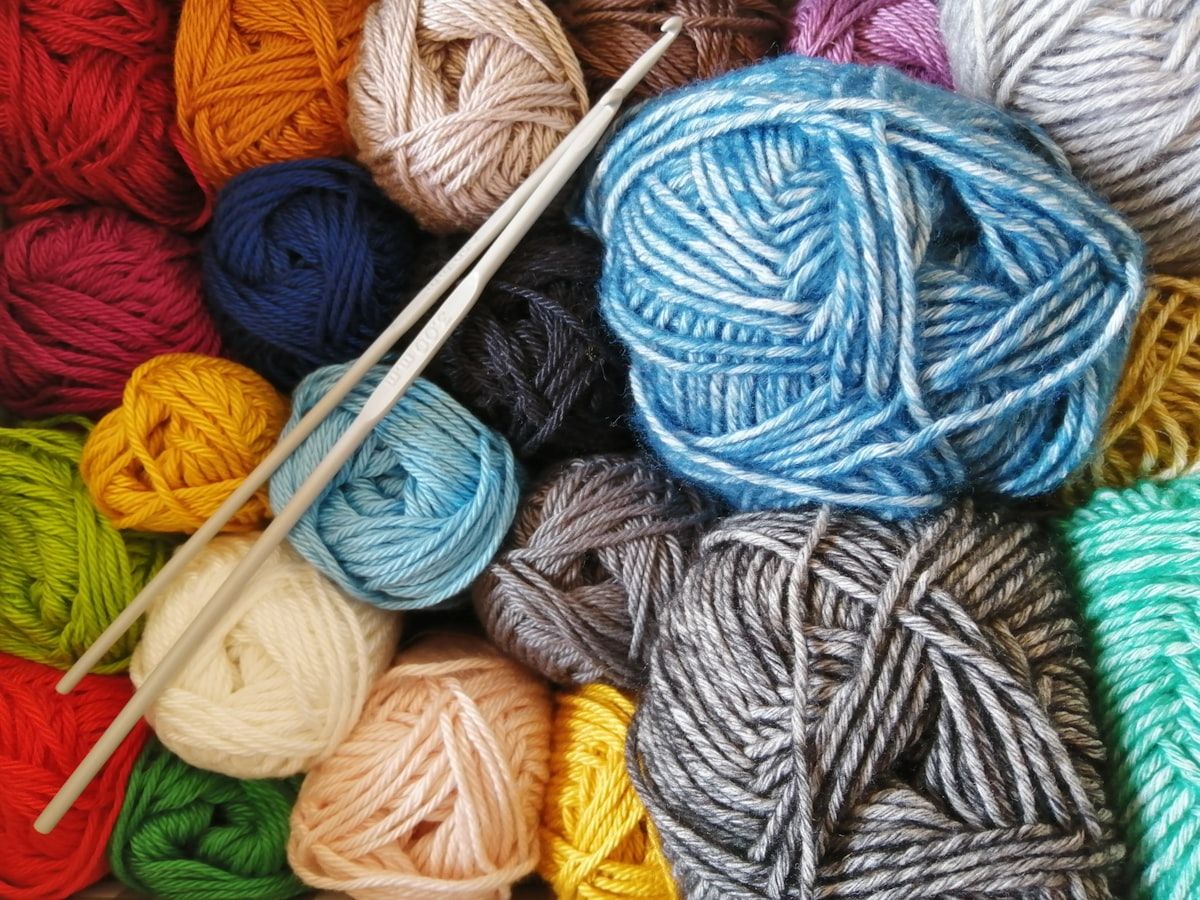
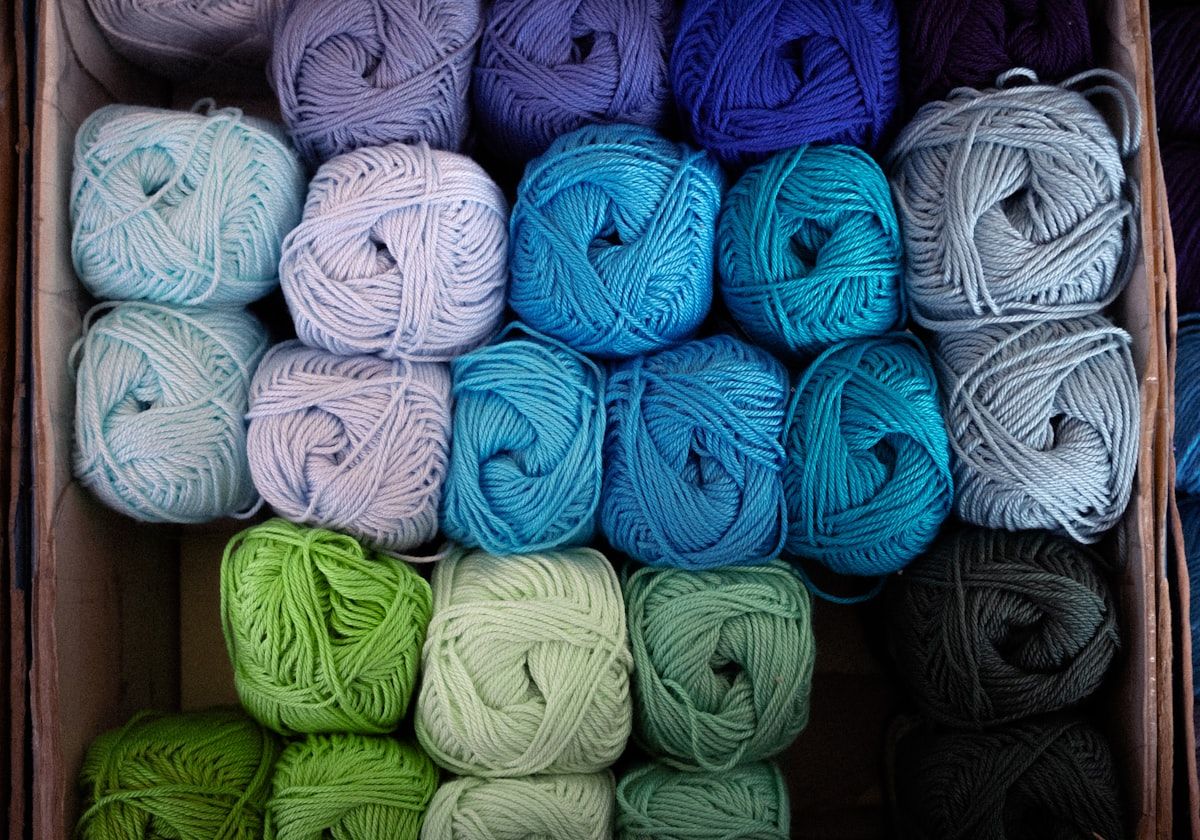
Overwhelmed by the yarn wall at your local shop? This guide breaks down everything you need to know about fiber content, weight, and texture so you can make confident choices every time.
Walking into a yarn shop for the first time is an experience that stays with you forever. The colors, the textures, the delicious smell of natural fibers — it is genuinely overwhelming in the best possible way. But how do you choose? How do you know which yarn is right for your project?
This guide will walk you through everything you need to make a confident yarn choice, every time.
Understanding Yarn Weight
Yarn weight refers to the thickness of the yarn, and it is the most fundamental factor in any pattern. Most knitting patterns specify a yarn weight, and matching it closely is important for gauge — the number of stitches and rows per inch that determines whether your finished project will be the right size.
Common yarn weights from lightest to heaviest:
- Lace: gossamer thin, used for delicate shawls and intricate lacework
- Fingering / Sock: lightweight, used for socks, delicate garments, and fine accessories
- DK (Double Knit): versatile mid-weight, great for garments, baby items, and light accessories
- Worsted: the most popular weight, works up quickly and suits a huge range of projects
- Bulky and Super Bulky: fast knitting, cozy results, great for blankets, cowls, and beginner projects
Fiber Content: What Makes Each Yarn Unique
Wool is the classic knitting fiber for good reason. It is elastic, which helps it spring back into shape after washing. It is warm, breathable, and has a natural crimp that makes it easy to work with. Merino wool is the softest variety and is often suitable for wearing next to skin.
Cotton is cool, crisp, and perfect for summer garments and dishcloths. It has little elasticity, which makes it more challenging to work with but produces beautifully structured results.
Alpaca is incredibly soft and luxuriously warm — warmer than wool by weight. It has no lanolin, making it suitable for people with wool sensitivities. It is heavier and less elastic than wool, so it drapes beautifully in garments.
Silk adds a beautiful sheen and incredible drape to any yarn it is blended with. Pure silk yarn is strong but slippery, so it is often blended with merino or other fibers for easier handling.
Nylon is not a natural fiber, but it is invaluable in sock yarn blends. Adding 20 to 30 percent nylon dramatically increases the durability of a yarn without affecting its softness.
Linen and hemp are plant fibers that soften beautifully with washing and wear. They are naturally cooling and work wonderfully for summer garments and market bags.
Hand-Dyed vs. Commercial Yarn
Hand-dyed yarns are dyed in small batches by independent dyers, often by hand using immersion or painted techniques. Each skein is unique. Colors tend to be richer and more complex than commercially dyed yarns, often featuring multiple tones within a single colorway.
At Heirloom Fibers, we work with hand-dyed yarn for much of our collection. The difference in color depth and character is immediately visible, and many of our customers tell us that working with a beautiful hand-dyed skein transforms the knitting experience entirely.
Reading a Yarn Label
Every yarn label contains important information: fiber content, weight, recommended needle size, yardage, and care instructions. Always check the yardage rather than the weight in grams — two balls of the same weight in different fibers can have wildly different yardage due to fiber density.
When substituting yarn in a pattern, match the gauge and yardage rather than just the weight category, and always knit a gauge swatch. Swatching is not the most exciting part of knitting, but it is the difference between a finished object that fits and one that does not.
Start With What You Love
The best yarn is the one that makes you excited to pick up your needles. If you fall in love with a particular skein of hand-dyed merino in a color that speaks to you, start there. Find a project that suits the weight and fiber, cast on, and let the knitting teach you the rest.
Published by Heirloom Fibers on May 27, 2026